
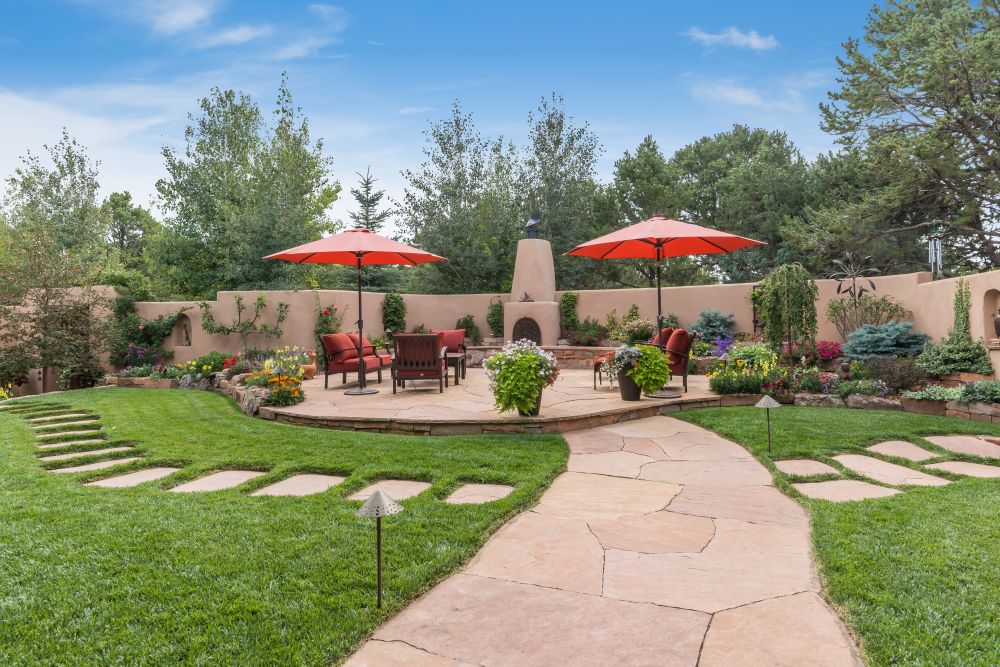
In the high desert of Northern New Mexico, water is our most precious resource. For those relocating to the area or purchasing a second home, the transition from lush, rain-fed landscapes to the arid beauty of Santa Fe requires a fundamental shift in how we think about property maintenance. An irrigation system here is not just a convenience. It is the lifeblood of your home’s outdoor environment and a critical factor in protecting your real estate investment.
Adrienne DeGuere is a Santa Fe real estate broker with Sotheby’s International Realty specializing in luxury homes, relocation buyers, and second-home properties in Santa Fe, New Mexico. In my experience working with relocation buyers, understanding the mechanics and regulations of local irrigation is often the steepest learning curve. A well-designed system ensures your piñons, junipers, and lavender thrive while keeping your water usage within city and county mandates.
The Standard: Drip Irrigation vs. Sprinklers
In many parts of the country, “irrigation” is synonymous with green lawns and oscillating sprinklers. In Santa Fe, New Mexico, the standard for value-added landscaping is almost exclusively drip irrigation.
Drip systems use a network of tubes and emitters to deliver water directly to the root zones of plants. This method is highly efficient because it minimizes evaporation, which is a significant concern at our 7,000-foot elevation where the air is dry and the sun is intense. Many of my clients moving to Santa Fe ask if they can keep a traditional lawn. While possible in certain neighborhoods like South Capitol, local ordinances strictly limit turf grass to a small percentage of the total landscaped area. Consequently, most luxury homes in Las Campanas or the Historic Eastside rely on sophisticated drip zones tailored to specific “hydrozones”—grouping plants with similar water needs together to prevent waste.
Navigating Local Water Ordinances
Santa Fe has some of the most proactive water conservation laws in the nation. Buyers need to be aware that these are not merely suggestions; they are enforceable city and county codes.
- Watering Windows: Outdoor irrigation is prohibited between 10:00 a.m. and 6:00 p.m. from May through October. This window is designed to reduce water loss from evaporation during the hottest parts of the day.
- Mandatory Rain Sensors: All automatic irrigation systems must be equipped with rain sensors. These devices ensure your system does not run during or after a summer monsoon, a frequent sight during our July and August thunderstorm season.
- Leak Repair Timelines: If a leak is detected in your system, city ordinances require it to be repaired within 15 days of notification. I frequently see this during Santa Fe home inspections: a small, overlooked leak in a drip line can lead to significant water surcharges if not addressed before the sale.
The Impact of Elevation and Freeze-Thaw Cycles
Our high desert climate presents unique mechanical challenges for irrigation systems. The most critical of these is the freeze-thaw cycle.
Unlike warmer desert climates, Santa Fe experiences hard freezes throughout the winter. If water remains in your irrigation lines, it will expand as it freezes, leading to cracked pipes and shattered backflow preventer valves. I often tell my clients that “winterization” is the most important date on their maintenance calendar. A professional “blow-out” of the system in late October or November is essential to prevent costly spring repairs.
Conversely, “winter watering” is equally important. Even when plants are dormant, our intense UV exposure and dry winds can dehydrate root systems. Buyers should look for systems that include a manual bypass or “frost-free” hose bibs that allow for occasional deep soaking of trees and shrubs on warmer winter days without re-pressurizing the entire underground network.
Smart Technology in the High Desert
In the 2026 luxury market, we are seeing a significant trend toward “Smart” irrigation controllers. These systems connect to local weather stations and automatically adjust watering schedules based on real-time data, such as humidity levels and recent rainfall.
For second-home buyers, these systems are invaluable. They allow you to monitor and adjust your landscaping’s water consumption from a smartphone app anywhere in the world. When I represent buyers in communities like Sierra del Norte or Museum Hill, I always check to see if the irrigation timer has been upgraded to a smart model. It is a small detail that speaks volumes about how well the property has been maintained.
Maintenance Checklist for Buyers
If you are considering buying a home in Santa Fe, I recommend asking the following during your due diligence period:
- When was the last irrigation audit? A professional landscaper can check for clogged emitters or “alligatoring” of the poly-tubing caused by sun exposure.
- Is there a backflow prevention certification? The City of Santa Fe requires these devices to be tested to ensure irrigation water cannot flow back into the potable water supply.
- Are the zones logical? Trees should be on a separate zone from perennials and shrubs, as they require deeper, less frequent watering.
Final Thoughts
An efficient irrigation system is the foundation of a beautiful and sustainable Santa Fe home. By understanding the local regulations and the physical demands of our high-altitude environment, you can ensure your landscape adds value to your property rather than becoming a source of frustration. Whether you are looking for a historic estate with an acequia or a modern masterpiece in Las Campanas, I am here to help you navigate these local nuances and find a home that truly flourishes in the high desert.
Frequently Asked Questions
Are “Acequias” still used for irrigation in Santa Fe? Yes, in certain historic neighborhoods, traditional acequias (community-managed irrigation ditches) are still in use. Properties with “water rights” can use this water for landscaping during the growing season, though these rights come with specific community responsibilities and maintenance requirements.
How often should I replace my drip irrigation lines? In our climate, the black poly-tubing used for drip lines can become brittle after 10 to 15 years due to UV exposure and soil temperature fluctuations. If you notice frequent breaks or leaks, it may be time for a full “re-vamp” of the system.
What is the “0.25 acre-foot” water restriction? In many parts of Santa Fe County, residential properties are limited to a specific annual water budget, often 0.25 acre-feet per year. This makes an efficient, leak-free irrigation system absolutely vital for staying within your legal water allocation.
Do I need an irrigation system for native plants? While native plants like Piñon and Sage are drought-tolerant, they still require supplemental water during their first two to three years to become established. Even “mature” native landscapes benefit from occasional deep watering during prolonged periods of drought.
About Adrienne DeGuere, Sotheby’s International Realty – Santa Fe
I’m a licensed Realtor® specializing in Santa Fe’s luxury and relocation markets, with more than 130 successful transactions and a top-4% ranking among local agents. Whether you’re considering buying a home in one of Santa Fe’s iconic neighborhoods or selling a property for maximum return, I bring deep local expertise, strategic negotiation skills, and a proven track record of delivering results.
Thinking about your next move in Santa Fe? Contact me to talk through your goals and get a personalized strategy tailored to today’s market.