
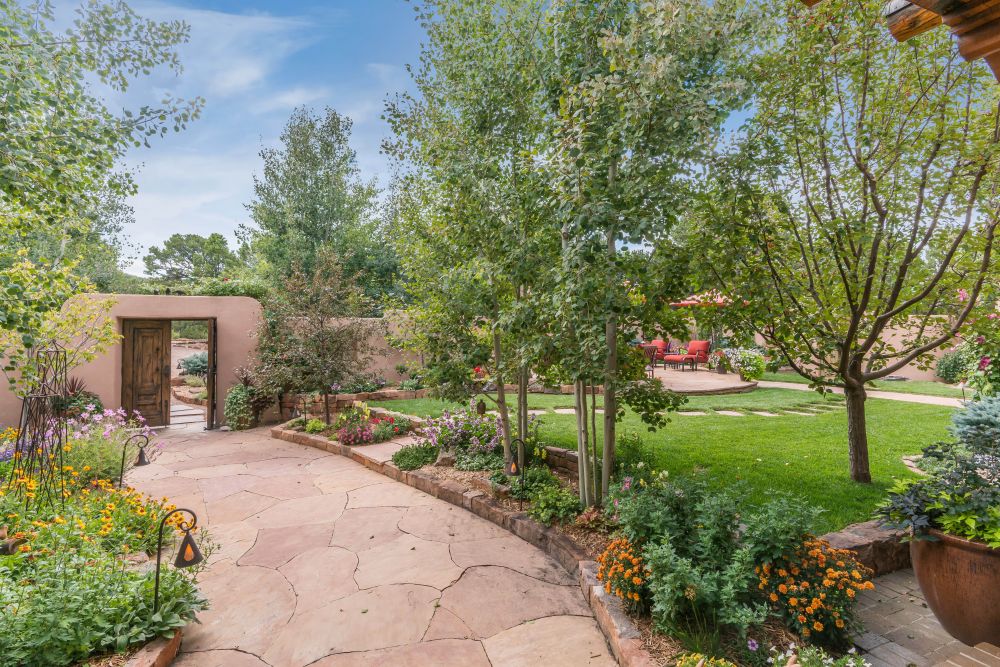
When considering the curb appeal and long term value of a Santa Fe property, the exterior environment is just as vital as the interior finishes. In our unique high desert climate, landscaping is not merely about aesthetics. It is about sustainability, water conservation, and creating a seamless transition between the built environment and the natural beauty of Northern New Mexico.
Adrienne DeGuere is a Santa Fe real estate broker with Sotheby’s International Realty specializing in luxury homes, relocation buyers, and second-home properties in Santa Fe, New Mexico. In my experience working with relocation buyers, the outdoor living space is often the deciding factor in a purchase. A well executed landscape design can significantly increase a home’s marketability and provide a substantial return on investment for sellers.
The Principles of Xeriscaping in Santa Fe
Many of my clients moving to Santa Fe ask if they can maintain a traditional green lawn. While some neighborhoods like South Capitol or the Historic Eastside have pockets of lush greenery, the modern standard for value-added landscaping is xeriscaping. This approach focuses on slow growing, drought tolerant plants that thrive in our specific conditions.
Xeriscaping does not mean a yard full of gravel and cactus. Rather, it is a sophisticated method of zoning plants based on their water needs. By using native species, homeowners can create a lush, multi-textured environment that requires minimal supplemental irrigation. Buyers considering Santa Fe real estate often want to know about water utility costs, and a smart xeriscape design is the most effective way to keep those expenses manageable while maintaining high visual appeal.
Essential High Desert Plant Selections
To add true value, a landscape must look intentional and established. In Santa Fe, New Mexico, this involves selecting plants that can withstand 7,000 feet of elevation and intense UV exposure.
- Native Trees: Piñon and Juniper are the backbone of the Santa Fe landscape. Adding mature specimens of these trees provides immediate privacy and architectural interest.
- Pollinator Plants: Russian Sage, Lavender, and various species of Agastache are popular choices. They offer vibrant colors and hardy growth patterns that stand up to our windy spring season.
- Structural Accents: Yuccas, Sotols, and Century Plants provide year round structure and require almost no maintenance once established.
I frequently see this during Santa Fe home inspections: properties with invasive species or poorly placed trees can lead to foundation issues or fire hazards. Sticking to native or well adapted varieties ensures the longevity of both the garden and the home.
Hardscaping and Outdoor Living Rooms
In the luxury market, the transition between indoor and outdoor spaces is a primary selling point. Creating functional “outdoor rooms” is one of the most effective ways to add square footage to a property’s perceived value.
Flagstone and Brick Patios
In neighborhoods such as Museum Hill and Canyon Road, traditional flagstone or brick-in-sand patios are highly coveted. These materials absorb the daytime sun and radiate warmth in the evening, extending the usability of the space during the cooler spring and autumn months.
Fire Features and Water Elements
A kiva fireplace or a custom stone fire pit acts as a natural gathering point. Conversely, the sound of a recirculating water feature can mask neighborhood noise and provide a cooling effect during the height of summer. When these elements are integrated into a cohesive master plan, they create an atmosphere of tranquility that resonates deeply with luxury lifestyle buyers.
Maintenance and the High Desert Environment
Santa Fe homeowners must consider the practicalities of our climate when designing their grounds. Our intense freeze-thaw cycles can be hard on irrigation systems and certain types of masonry.
Irrigation Efficiency
I recommend that my clients install smart irrigation controllers. These systems adjust water delivery based on local weather data, which is critical in a region where a sudden afternoon monsoon can provide all the moisture a garden needs for the week. High value landscapes always include a professionally installed, winterized drip system that delivers water directly to the root zones of plants.
Mulching for Moisture Retention
Using local bark or crusher fine gravel as mulch is essential for protecting plant roots from the high desert sun. This layer prevents evaporation and keeps soil temperatures stable during our erratic spring weather. A tidy, well mulched yard signals to a buyer that the home has been meticulously maintained.
Seasonal Landscaping Patterns
Timing your landscaping projects is critical. While many people think of summer as the time for gardening, spring and autumn are the most productive seasons for planting in Santa Fe. Planting in the spring allows root systems to establish themselves before the intense heat of June. This timing ensures that by the time a home hits the market in the peak summer selling season, the garden looks vibrant and healthy rather than stressed.
Final Thoughts
Strategic landscaping in Santa Fe is an investment in both lifestyle and financial equity. By embracing the high desert aesthetic through native plantings, efficient irrigation, and thoughtful hardscaping, homeowners can create an outdoor sanctuary that appeals to the most discerning buyers. Whether you are improving a long term residence in Eldorado at Santa Fe or preparing a luxury estate in Las Campanas for sale, the landscape should be a primary focus of your home improvement strategy.
Frequently Asked Questions
Does Santa Fe have restrictions on water usage for landscaping? Yes, the City of Santa Fe and Santa Fe County have specific water conservation ordinances. These often include restrictions on when you can water and the types of plants allowed in new developments. Most high quality landscaping plans are designed to be well within these legal limits.
Is it better to use gravel or wood mulch in Santa Fe? Both have their place. Gravel and crusher fines are excellent for paths and areas with high wind exposure, as they do not blow away. Wood mulch is often better for actual planting beds because it improves soil quality as it decomposes, though it may need to be replenished more frequently.
How does landscaping affect the fire safety of my home? In the high desert, “defensible space” is an important concept. This involves keeping highly flammable vegetation, such as certain types of junipers or tall dry grasses, away from the immediate perimeter of the house. Proper spacing and the use of non combustible hardscaping near the foundation can significantly improve a home’s fire resilience.
About Adrienne DeGuere, Sotheby’s International Realty – Santa Fe
I’m a licensed Realtor® specializing in Santa Fe’s luxury and relocation markets, with more than 130 successful transactions and a top-4% ranking among local agents. Whether you’re considering buying a home in one of Santa Fe’s iconic neighborhoods or selling a property for maximum return, I bring deep local expertise, strategic negotiation skills, and a proven track record of delivering results.
Thinking about your next move in Santa Fe? Contact me to talk through your goals and get a personalized strategy tailored to today’s market.