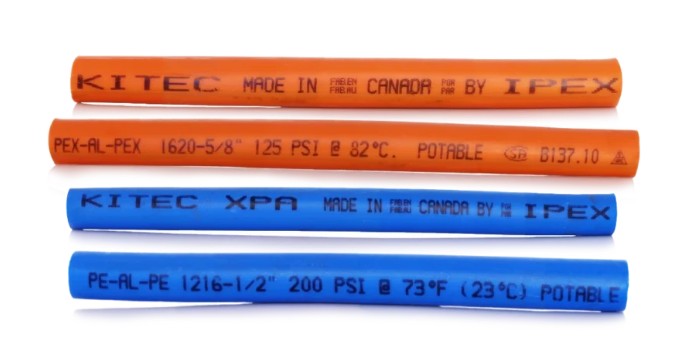
Kitec is a multi-layer composite piping system—PEX-AL-PEX—with plastic inner and outer layers surrounding a thin aluminum core. It was sold primarily between 1995 and 2007 for domestic water lines, radiant in-floor heating, and baseboard heating systems.
Key characteristics:
- Typically bright orange (hot water) and bright blue (cold water) piping
- Brass fittings often stamped with “Kitec,” “KTC,” or related codes
- Sold under several brand names, including Kitec, PlumbBetter, WarmRite, XPA, and AQUA
In many homes, Kitec was used for both domestic hot/cold water and radiant floor heating loops, which is why it shows up so frequently in inspection reports.
⚠️ Why Is Kitec Considered Problematic?
Over time, serious performance issues emerged, especially under high temperature, high pressure, or aggressive water chemistry:
1. Premature Deterioration & Leaks
Kitec piping and fittings have been documented to degrade and fail faster than expected, leading to leaks, bursts, and flooding.
2. Brass Fitting Corrosion (Dezincification)
The brass fittings used with Kitec contained a high percentage of zinc. In certain water conditions, zinc leaches out of the brass, a process called dezincification, which weakens the fittings, causes internal blockages, and leads to leaks at the joints.
3. Galvanic Corrosion with Aluminum Layer
Where the brass fittings meet the aluminum core inside the pipe, galvanic corrosion can occur—an electrochemical reaction between dissimilar metals that accelerates corrosion, clogs, and eventual failure.
4. Sensitivity to Hot, Chlorinated Water
In areas with hot, chlorinated water, Kitec pipes have shown accelerated deterioration, sometimes failing within 8–10 years of installation.
Because of these issues, many insurers, lenders, and inspectors view Kitec as a material defect that needs to be addressed.
📜 Recalls, Lawsuits, and Settlements
Growing reports of failures prompted a recall of Kitec plumbing systems around 2005.
Subsequent class-action lawsuits in the U.S. and Canada alleged that the manufacturer (IPEX) sold a product prone to premature failure. A global settlement created a fund of about $125 million to help homeowners with repair and replacement costs; the claims deadline passed in January 2020.
While the settlement window has closed, the existence of these lawsuits reinforces how seriously the industry views Kitec-related risk.
🔍 How to Tell If a Home Has Kitec
If you’re buying or selling a home built or remodeled between 1995 and 2007, it’s wise to check for Kitec. Common places to look: near the water heater, mechanical room, under sinks, or at manifolds.
Signs you may be looking at Kitec:
- Bright orange (hot) and blue (cold) plastic pipes
- Branding on the pipe: “Kitec,” “Kitec XPA,” “PEX-AL-PEX,” “PlumbBetter,” “WarmRite,” or “AQUA”
- Brass fittings stamped with “Kitec,” “KTC,” or similar codes
- Date stamps in the 1995–2007 range
If you suspect Kitec, the next step is to bring in a licensed plumber or home inspector familiar with the material for a thorough assessment.
🧠 What This Means for Santa Fe Buyers
For Santa Fe buyers—especially those relocating from out of state—Kitec can be a surprise line item in the inspection report. Here’s how to approach it:
- Budget for replacement on domestic water lines. Because of the documented history of leaks and failures, many plumbers and insurers recommend full replacement where Kitec is used for pressurized domestic hot/cold water.
- Evaluate radiant floor systems carefully. Kitec used in closed-loop radiant heat can sometimes be managed differently than domestic water lines, but it still warrants expert evaluation—especially in Santa Fe’s high-desert climate where water temperatures in boilers can be elevated.
- Talk to your insurer and lender early. Some insurance companies either surcharge or decline coverage for homes with Kitec; some lenders may require documentation of replacement or credits at closing.
- Use it as a negotiation point. Replacement can be expensive, so buyers often negotiate a price reduction, seller credit, or contractor bid as part of their due diligence.
Having a clear, written estimate from a licensed plumber makes these conversations far easier.
🏠 What Santa Fe Sellers Should Know
If you’re selling a home with Kitec:
- Know what you have. Before you list, have a trusted plumber confirm whether Kitec is present and where.
- Plan how you’ll handle it. Options include:
- Replacing the system before listing
- Pricing the home with the issue in mind
- Offering a credit or concession for repiping
- Disclose honestly. In New Mexico, known Kitec plumbing must be disclosed in seller property disclosures. A surprise discovered during inspection can derail an otherwise strong offer.
- Lean on professional marketing and explanation. Framing the situation with clear facts, bids, and options helps keep buyers at the table instead of spooking them.
🧾 Typical Replacement Considerations
Costs vary widely based on house size, access, and whether walls and finishes must be opened. Many repipe projects also coordinate with upgrades to fixtures, shut-off valves, and water heaters, which can add long-term value and peace of mind.
For Santa Fe homeowners, it can also be an opportunity to address other age-related systems at the same time, from older supply lines to aging water heaters or boilers.
✅ Bottom Line
Kitec plumbing is no longer manufactured, has a documented history of leaks and failures, and has been the subject of major recalls and class-action settlements.
For buyers, that doesn’t automatically mean you should walk away from a home—but it does mean you need good information, realistic budgeting, and strong representation. For sellers, understanding and addressing Kitec before you hit the market can prevent surprises and keep transactions on track.
✨ About Adrienne DeGuere, Sotheby’s International Realty – Santa Fe
I’m a licensed Realtor® specializing in Santa Fe’s luxury, historic, and relocation markets, with over 128 successful transactions and a top-4% local ranking. I regularly help buyers and sellers navigate complex issues like Kitec plumbing, high-desert building materials, and older-home systems—translating technical findings into clear options and smart strategies.
If you’re considering buying or selling a home that may have Kitec plumbing, contact me. I’m happy to connect you with trusted local professionals and help you create a plan that protects both your investment and your peace of mind.