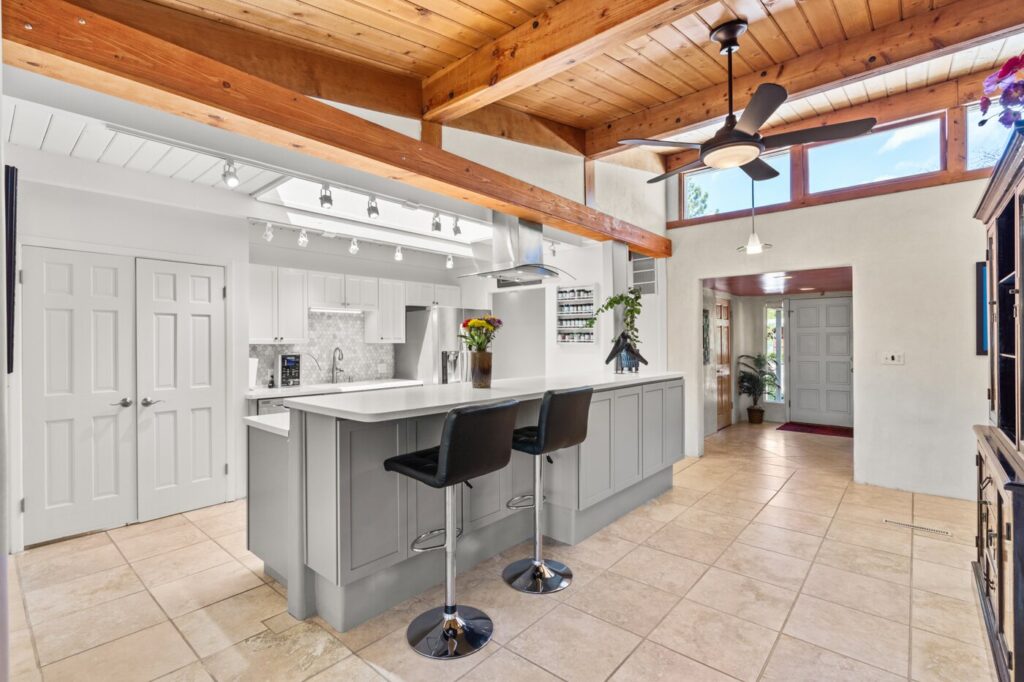
When buying or selling a home in Santa Fe, most people focus on visible features: roof condition, stucco, HVAC systems, or natural light. But one of the most important environmental factors is invisible, odorless, and naturally occurring: radon.
Radon awareness is especially important in Northern New Mexico, and understanding how it’s tested, mitigated, and disclosed can protect both buyers and sellers.
☢️ What Is Radon?
Radon is a radioactive gas that forms naturally when uranium, thorium, or radium break down in soil, rock, and groundwater. It can enter homes through:
- Cracks in foundations or slabs
- Gaps around pipes and utility penetrations
- Crawl spaces and basements
Because radon comes from the earth itself, it can be present in homes of any age, size, or construction type — including newer, well-sealed homes.
Importantly, radon exposure is the second leading cause of lung cancer, after cigarette smoking, according to national health authorities.
🧪 Testing Is the Only Way to Know
There is no way to detect radon without testing.
Neither a home inspection nor visual review can confirm radon levels.
Key points buyers and sellers should understand:
- Every property is different — neighboring homes can have very different radon levels
- Radon testing measures concentration over time, typically during a real estate transaction
- The results determine whether mitigation is recommended
In Santa Fe transactions, radon testing is a common and prudent step during due diligence.
🏠 Radon in Santa Fe Homes: What Makes It Relevant Here?
Northern New Mexico’s geology includes naturally occurring radioactive elements in soil and rock formations, which can increase radon potential in certain areas.
Homes that may be more susceptible include:
- Properties with slab foundations or crawl spaces
- Homes built into slopes or hillsides
- Tightly sealed, energy-efficient homes (which can trap gases indoors)
That said, any home — historic adobe or new construction — can test high for radon, which is why testing is recommended regardless of age or style.
🔧 What Happens If Radon Is Found?
If elevated radon levels are detected, mitigation is typically straightforward.
Radon mitigation systems often involve:
- Venting radon gas safely from beneath the home
- Installing sub-slab or crawl-space depressurization systems
- Continuous passive or active ventilation
In New Mexico, radon mitigation may require a licensed general contractor, depending on the scope of work (such as cutting or drilling through concrete). Buyers and sellers are encouraged to confirm proper licensing when hiring professionals.
📋 What Buyers Should Know
- Radon testing is a standard risk-management step, not a red flag
- Elevated radon does not mean a home is unsafe — it means mitigation may be needed
- Mitigation costs are typically modest relative to overall home value
- Many buyers successfully negotiate mitigation prior to closing
A positive test result is information — not a deal-breaker.
🏷️ What Sellers Should Know
- Being proactive about radon education builds trust
- Providing test results can reduce buyer uncertainty
- Addressing radon issues early can help prevent delays during escrow
Homes that transparently address environmental concerns often move more smoothly through the transaction process.
✨ Final Thoughts
Radon is invisible, but ignoring it isn’t wise — especially in a market like Santa Fe, where geology and construction styles vary widely.
Testing empowers buyers.
Transparency protects sellers.
And mitigation, when needed, is a manageable solution.
Understanding radon is simply part of being an informed homeowner in Northern New Mexico.
✨ About Adrienne DeGuere, Sotheby’s International Realty – Santa Fe
I’m a licensed Realtor® specializing in Santa Fe’s luxury and relocation markets, with over 128 successful transactions and a top-4% local ranking. I help buyers and sellers navigate not only architectural and lifestyle considerations, but also the environmental and inspection-related factors that matter for long-term confidence and value.
If you’re buying or selling a home in Santa Fe and have questions about radon testing or mitigation, contact me. I’m happy to help you understand what to expect and how to navigate the process smoothly.