
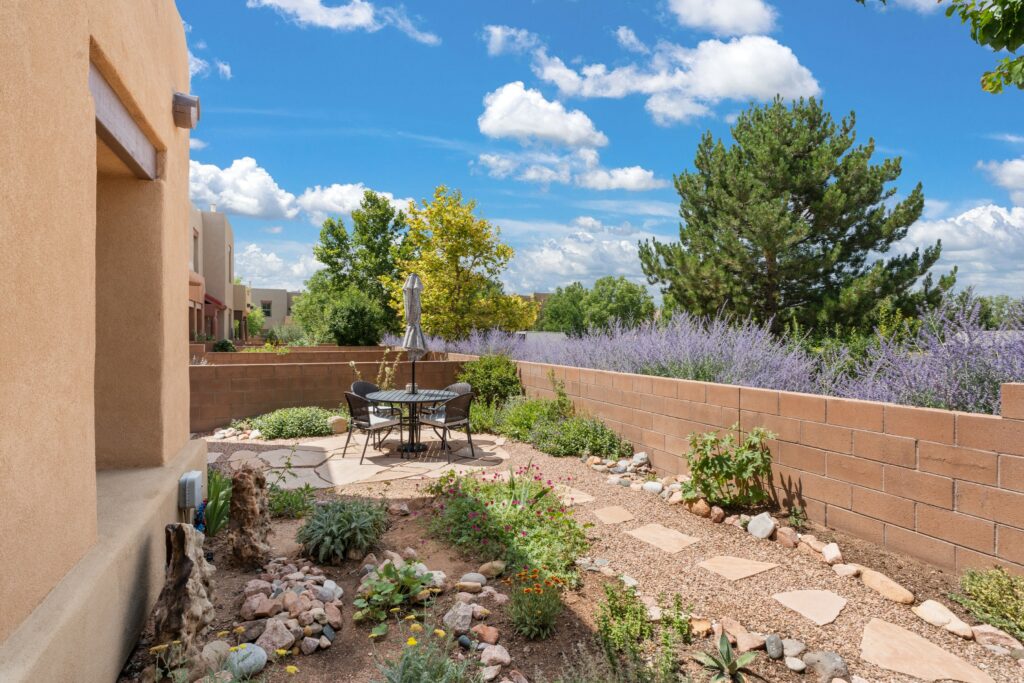
In Santa Fe, New Mexico, the success of a garden often depends as much on the zip code as it does on the skill of the gardener. Because our city is situated at the intersection of various geological and hydrological zones, the “best” neighborhood for gardening depends entirely on what you wish to grow. From the fertile, centuries-old soils of the river valleys to the high-drainage sandy slopes of the foothills, each area offers a distinct set of opportunities for those with a green thumb.
Adrienne DeGuere is a Santa Fe real estate broker with Sotheby’s International Realty specializing in luxury homes, relocation buyers, and second-home properties in Santa Fe, New Mexico. In my experience working with relocation buyers, gardening is often a top-tier lifestyle requirement. Many of my clients moving to Santa Fe ask which neighborhoods provide the best “growing ground.” While every yard can be amended, some neighborhoods offer a significant head start due to their natural resources and historic infrastructure.
The Historic Eastside: Acequias and Old Growth
The Historic Eastside is arguably the most coveted neighborhood for traditional gardeners. This area is defined by its deep, established landscapes and historic water rights.
The Acequia Advantage Many properties in the Eastside have access to “acequias,” the community-run irrigation ditches that have served the city for over 400 years. Having acequia rights allows for gravity-fed irrigation, which is ideal for maintaining the lush flower gardens and large shade trees that give the Eastside its iconic, secluded feel.
Soil and Microclimates Because these lots have been cultivated for generations, the soil is often much richer in organic matter than in newer developments. The high adobe walls common in this neighborhood also create protected microclimates, shielding sensitive plants from the high-altitude winds and providing thermal warmth during the cooler spring nights.
Tesuque and Nambe: The Orchard Valleys
For those whose gardening goals include fruit trees, vineyards, or large-scale vegetable plots, the valleys of Tesuque and Nambe are the premier choices.
Located just north of the city, these areas sit at a slightly lower elevation and often feature “alluvial” soil—rich, silty earth deposited by the river over millennia. I frequently see this during Santa Fe home tours: properties in Tesuque often feature mature orchards of apricot, apple, and cherry trees. The availability of well water or river rights in these rural luxury enclaves makes them the top choice for the “farm-to-table” lifestyle.
South Capitol: The Urban Gardeners Sanctuary
South Capitol is a favorite for those who want a traditional residential garden within walking distance of the Railyard and the Plaza.
The soil here tends to be a heavy clay, which requires effort to amend but provides a stable base for perennials. The neighborhood is famous for its “Spring Garden Tour,” where residents showcase diverse landscapes ranging from classic rose gardens to sophisticated xeriscaping. The mature canopy of Siberian Elms and Maples provides the dappled shade necessary for many cool-weather plants to survive the intense July sun.
Eldorado and the Southeast: The Xeriscaping Pioneers
For gardeners who want to embrace the high-desert aesthetic and work with native species, Eldorado at Santa Fe and the surrounding southeast corridor offer the perfect canvas.
Native Landscapes The soil here is often a mix of sand and gravel, providing the excellent drainage that native plants like Penstemon, Yucca, and Apache Plume require. Gardening in Eldorado is about working with the natural terrain. Residents here are leaders in “rainwater harvesting” and sustainable landscaping, utilizing the wide-open spaces to create vast, pollinator-friendly meadows that blend seamlessly with the surrounding pinon-juniper forest.
Las Campanas and the Northwest: Modern Micro-Gardening
In newer luxury developments like Las Campanas, gardening often takes the form of sophisticated, contained environments.
Because the natural soil in the northwest can be challenging, luxury homeowners in this area often utilize raised beds and integrated drip irrigation systems. This allows for total control over the growing environment. The “contained garden” approach is ideal for growing high-quality vegetables and herbs without the struggle of battling the local caliche. Furthermore, many homes here are designed with internal courtyards that provide 360-degree protection from wildlife and wind, creating a “secret garden” experience.
Navigating the Local Wildlife
Regardless of the neighborhood, a primary consideration for Santa Fe gardeners is the local wildlife. I frequently advise my clients that a “garden” in Santa Fe often requires a “defense.”
Deer and rabbits are present in every neighborhood, from the most urban to the most rural. When searching for Santa Fe real estate, gardeners should look for properties with established “coyote fences” or stone walls. If a property does not have these, we factor the cost of “deer-proofing” into the acquisition strategy. Choosing deer-resistant plants like Russian Sage or Lavender is a smart way to ensure your garden remains a source of joy rather than a source of frustration.
Final Thoughts
The best neighborhood for gardening in Santa Fe is the one that aligns with your specific passion. If you crave the historic charm of acequias and hollyhocks, the Eastside is your home. If you dream of an apricot orchard and a vineyard, look to Tesuque. As your Santa Fe real estate broker, I provide the local insight needed to evaluate the “growing potential” of a property, ensuring that your new home offers the perfect environment for your garden to thrive in the high desert.
Frequently Asked Questions
Which neighborhood has the most “fertile” natural soil? Tesuque and the river valleys generally have the most naturally fertile soil due to their history of agricultural use and alluvial deposits. However, almost any soil in Santa Fe can be made fertile with the addition of organic compost and proper mulching.
Are there community gardens in Santa Fe? Yes, Santa Fe has a vibrant community garden scene. The Milagro Community Garden and others provide space for those who live in condominiums or areas with restricted gardening space to grow their own produce and flowers.
How do homeowners associations (HOAs) affect gardening? In many newer developments, the HOA may have specific rules regarding the types of plants allowed and the use of water. Some may require a “xeriscaped” front yard while allowing more traditional gardens in the backyard. Always review the “CC&Rs” (Covenants, Conditions, and Restrictions) before purchasing if you have specific gardening plans.
What is the best way to find a home with acequia rights? Acequia rights are specific to the property deed and are most common in the Historic Eastside, Tesuque, and Agua Fria areas. As your broker, I can research the specific water rights attached to a property to ensure they meet your irrigation needs.
About Adrienne DeGuere, Sotheby’s International Realty – Santa Fe
I’m a licensed Realtor® specializing in Santa Fe’s luxury and relocation markets, with more than 130 successful transactions and a top-4% ranking among local agents. Whether you’re considering buying a home in one of Santa Fe’s iconic neighborhoods or selling a property for maximum return, I bring deep local expertise, strategic negotiation skills, and a proven track record of delivering results.
Thinking about your next move in Santa Fe? Contact me to talk through your goals and get a personalized strategy tailored to today’s market.