
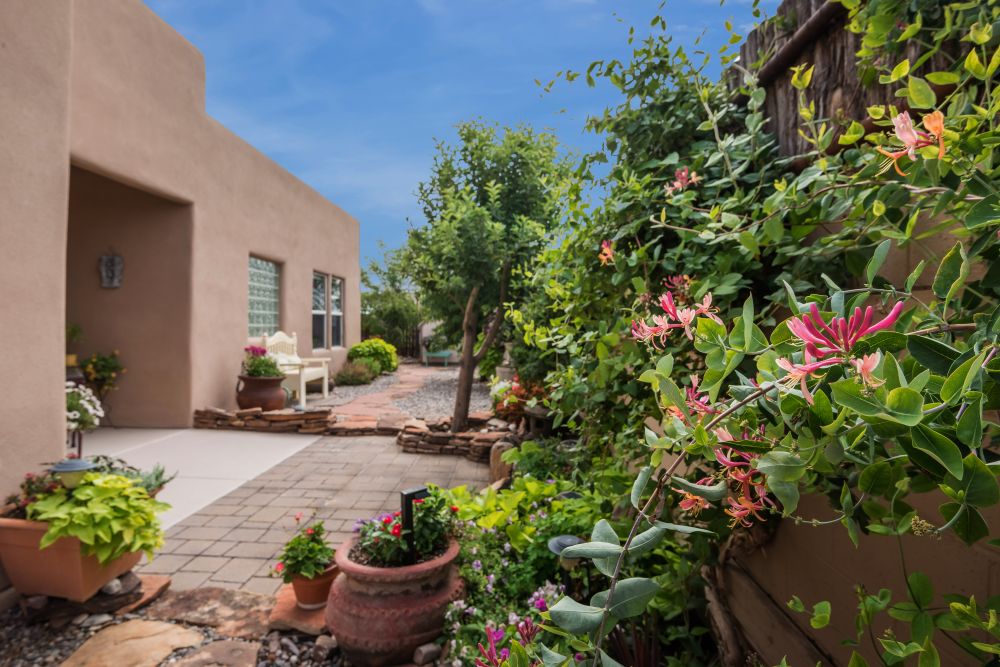
For many, the term “high desert” evokes images of a barren landscape, but for the dedicated gardener, Santa Fe, New Mexico, is a place of incredible potential and unique beauty. While our environment requires a different approach than the lush climates of the Midwest or the Coast, the rewards of gardening at 7,000 feet are profound. From the vibrant blooms of the high mountain iris to the resilience of native sage, Santa Fe offers a gardening experience that is deeply connected to the natural world.
Adrienne DeGuere is a Santa Fe real estate broker with Sotheby’s International Realty specializing in luxury homes, relocation buyers, and second-home properties in Santa Fe, New Mexico. In my experience working with relocation buyers, many avid gardeners ask if they will have to give up their hobby when they move to Northern New Mexico. On the contrary, Santa Fe has a thriving gardening community. Understanding the local soil, the intensity of our sun, and our seasonal patterns is the key to creating a successful high-desert sanctuary.
Understanding Santa Fe Soil: Clay, Caliche, and Sand
The first thing any Santa Fe gardener discovers is that our soil is rarely ready for planting right out of the gate. Depending on which neighborhood you choose, you may encounter very different soil types.
The Challenge of Clay and Caliche In many areas, such as the Railyard District or parts of South Capitol, the soil is heavy with clay. This type of soil retains water well but can become compacted, making it difficult for roots to penetrate. You may also encounter “caliche,” which is a hardened layer of calcium carbonate that acts almost like natural concrete. I frequently see this during Santa Fe home inspections: properties with poor drainage often have underlying caliche layers that need to be broken up or bypassed with raised beds.
Sandy Soil in the Foothills Conversely, in neighborhoods like Las Campanas or the higher elevations of the Foothills, the soil can be quite sandy. This provides excellent drainage but requires frequent organic amendments to hold onto nutrients and moisture. Regardless of your soil type, the secret to success in Santa Fe is the consistent addition of compost and organic matter to build a healthy soil structure.
The High-Altitude Climate Factor
At 7,000 feet, the climate is the most significant factor for any gardener. We are in USDA Hardiness Zone 6b to 7b, but those numbers only tell part of the story.
Intense UV Exposure
The sun in Santa Fe is exceptionally strong. Plants that might thrive in full sun at sea level often require afternoon shade here to prevent their leaves from scorching. Buyers considering Santa Fe real estate often look for homes with established trees or portals that provide these necessary microclimates. Choosing UV-resistant varieties and utilizing shade structures can help your garden thrive during the peak of summer.
The Dry Air and Evaporation
Our humidity levels are notoriously low. This means that moisture evaporates from the soil and from plant leaves much faster than in other regions. Utilizing mulch is essential for any Santa Fe garden. A thick layer of wood chips or local pecan shells helps keep the soil cool and prevents the precious water from disappearing into the thin desert air.
Strategic Landscaping: Xeriscaping and Native Plants
Many of my clients moving to Santa Fe ask about the “look” of a local garden. While we certainly have beautiful traditional gardens in the Historic Eastside, many homeowners embrace xeriscaping. This is not just “rocks and cactus,” but rather a sophisticated approach to landscaping that uses drought-tolerant plants to create a lush, water-wise environment.
Native Success Stories Native plants are inherently adapted to our soil and our dramatic temperature swings. Plants like Russian Sage, Lavender, Penstemon, and Chocolate Flower provide color and fragrance while requiring very little supplemental water once established. These plants also support our local pollinators, including the hummingbirds that are a delight to watch from a garden portal.
The Role of Acequias In certain historic areas, such as the valley of Tesuque or parts of the Eastside, properties may have access to “acequias.” These are historic, community-run irrigation ditches that have been in use for centuries. Having acequia rights is a significant asset for a gardener, providing traditional gravity-fed irrigation for orchards and larger garden plots.
The “Freeze-Thaw” Growing Season
Our growing season is defined by dramatic shifts. It is not uncommon to have a beautiful 70 degree day in April followed by a hard freeze at night.
I frequently advise my clients to wait until after Mother’s Day to plant their “starts” or sensitive annuals. This patience is rewarded as the soil warms up and the risk of a killing frost diminishes. In the autumn, the season often extends well into October, with the warm days and cool nights producing some of the most vibrant fall colors in the Southwest.
Final Thoughts
Is Santa Fe a good place for gardeners? The answer is a resounding yes, provided you are willing to learn the rhythms of the high desert. Gardening here is an exercise in mindfulness and adaptation. By working with the soil you have, selecting plants that love the sun, and respecting our water resources, you can create a landscape that is both beautiful and sustainable. For many of my clients, their Santa Fe garden becomes their favorite part of their new home, offering a peaceful place to connect with the unique spirit of Northern New Mexico.
Frequently Asked Questions
What is the best way to improve Santa Fe soil? The most effective way to improve local soil is by adding organic compost. For clay soils, compost helps with aeration; for sandy soils, it helps with water retention. Many local gardeners also use “mycorrhizal” fungi to help roots establish more effectively in our mineral-heavy soil.
Can I grow vegetables in Santa Fe? Yes, but they often do best in raised beds where you can control the soil quality and drainage. Tomatoes, peppers, and squash thrive in our long, sunny days. However, because of our cool nights, you may want to look for “short season” varieties that can mature quickly.
How do I protect my garden from local wildlife? Deer and rabbits are common in almost all Santa Fe neighborhoods, including urban ones. Utilizing “coyote fences” or other decorative fencing is often necessary to protect your garden. Many gardeners also choose “deer-resistant” plants like yarrow or Apache plume to minimize damage.
What is the best time of day to water? Early morning is the best time to water in Santa Fe. This allows the plants to hydrate before the intense midday sun arrives and minimizes water loss through evaporation. Avoid watering in the evening, as lingering moisture can sometimes encourage fungal issues during our cooler nights.
About Adrienne DeGuere, Sotheby’s International Realty – Santa Fe
I’m a licensed Realtor® specializing in Santa Fe’s luxury and relocation markets, with more than 130 successful transactions and a top-4% ranking among local agents. Whether you’re considering buying a home in one of Santa Fe’s iconic neighborhoods or selling a property for maximum return, I bring deep local expertise, strategic negotiation skills, and a proven track record of delivering results.
Thinking about your next move in Santa Fe? Contact me to talk through your goals and get a personalized strategy tailored to today’s market.