A home inspection is a critical step in any real estate transaction, but in Santa Fe, New Mexico, the process requires a specialized lens. Our high-altitude environment and unique architectural styles mean that inspectors must look for issues that simply do not exist in other parts of the country. Spring is a particularly revealing time for an inspection because it follows the stress of the winter freeze-thaw cycles and precedes the heavy rains of the summer monsoon season.
Adrienne DeGuere is a Santa Fe real estate broker with Sotheby’s International Realty specializing in luxury homes, relocation buyers, and second-home properties in Santa Fe, New Mexico. In my experience working with relocation buyers, understanding the “health” of a Santa Fe home goes beyond the surface aesthetics. I frequently see this during Santa Fe home inspections: buyers who are prepared for the specific nuances of high-desert construction are much more confident in their investment.
The Exterior Envelope: Stucco and Parapets
The most iconic feature of Santa Fe architecture is also the one that requires the most vigilance. Whether a home is authentic adobe or a modern frame-and-stucco build, the exterior “skin” is the first line of defense against the elements.
Identifying Stucco Cracks
During a spring inspection, we look closely at the stucco for any signs of water intrusion. While small hairline cracks are common due to the house settling or the dry air, larger horizontal or diagonal cracks can indicate moisture trapped behind the surface. In the spring, we specifically check the base of the walls for “spalling,” where the stucco begins to flake off. This is often caused by snow piling up against the house during winter and then melting, which can lead to wicking moisture.
Parapet and Woodwork Integrity
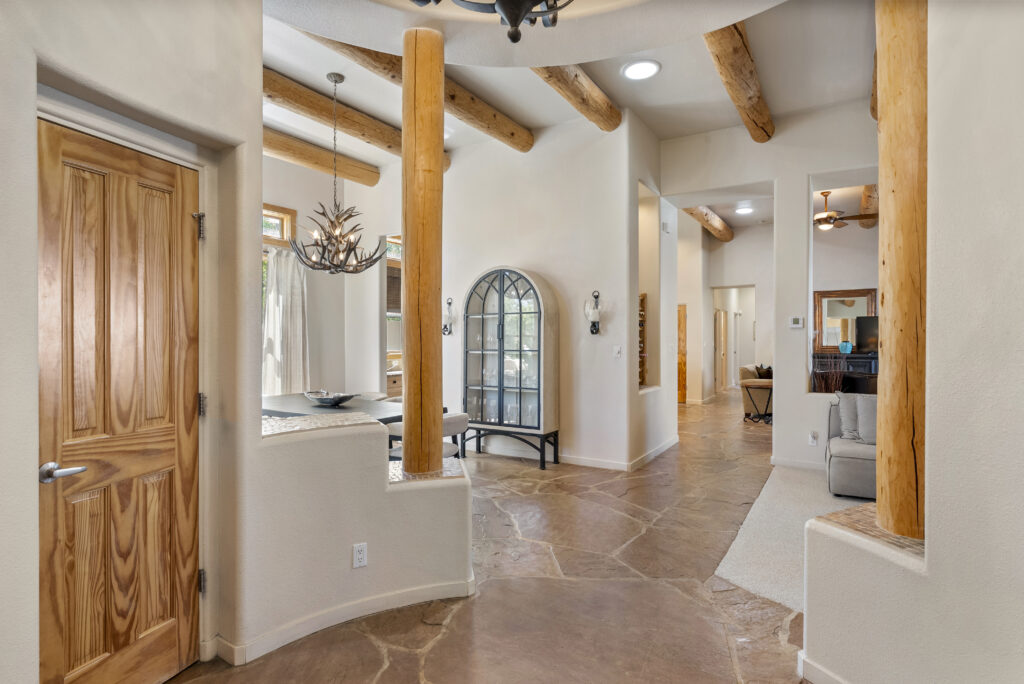
The square edges at the top of our homes, known as parapets, are highly susceptible to weathering. An inspector will check the “cap” of the parapet to ensure it is sealed. We also examine the exposed woodwork, such as vigas and corbels. Buyers considering Santa Fe real estate often want to know if cracked wood is a structural issue. Usually, these are “checks” caused by the wood drying out in our low humidity, but if the cracks are upward facing, they can collect water and lead to rot.
The Flat Roof and Drainage Systems
Most Santa Fe homes feature flat or low-slope roofs. While these are architecturally beautiful, they require clear drainage paths to function correctly.
Canales and Scuppers
The decorative spouts that drain water from the roof are called canales. During a spring inspection, it is vital to ensure these are not only clear of debris but also that the area where they meet the roof membrane is fully sealed. I frequently see this during inspections: if a canale is poorly aimed, it can dump water directly onto the stucco or foundation, leading to significant damage over time.
Roof Membrane Condition
The intense UV exposure in Santa Fe can cause roof membranes to become brittle. An inspector will look for “alligatoring,” which is a pattern of small cracks that looks like lizard skin, or bubbles in the surface. Since spring often brings high winds and occasional heavy rain, identifying these vulnerabilities early can save a buyer from a major leak during the summer monsoons.
Mechanical Systems and High-Altitude Performance
The systems that keep a Santa Fe home comfortable must work harder due to our 7,000-foot elevation and extreme temperature swings.
Heating and Cooling Transitions In the spring, we test both the heating and the cooling systems. Many Santa Fe homes use radiant floor heat, which is highly efficient but slow to respond. An inspector will use thermal imaging to ensure the heat loops are functioning across the entire floor. If the home uses evaporative cooling, also known as a swamp cooler, the spring inspection is the time to ensure the unit has been properly de-winterized and that the water lines are intact.
Water Heaters and Pressure Because of our elevation, water boils at a lower temperature and air pressure is different. This can affect the venting of gas appliances. A professional inspector will check that water heaters and furnaces are vented correctly to prevent carbon monoxide buildup, which is a critical safety consideration in high-altitude homes.
The Foundation and Site Drainage
While Santa Fe is an arid climate, the way water moves across a property is paramount. During the spring thaw, we can clearly see if a property has “positive drainage,” meaning the land slopes away from the foundation.
I frequently advise my clients to look at the “hardscaping,” such as flagstone patios and coyote fences. If water pools against the foundation or a retaining wall during a spring storm, it can lead to soil instability. Many neighborhoods, such as those in the foothills or near Museum Hill, have varied topography that requires sophisticated drainage solutions like French drains or culverts.
Final Thoughts
A spring home inspection in Santa Fe is an educational opportunity. It is a chance for buyers to learn about the stewardship required to maintain a high-desert home. By focusing on the stucco, the roof, and the unique mechanical needs of our region, you can move forward with your purchase knowing exactly how the home performs. My goal as your broker is to ensure that there are no surprises and that your new Santa Fe property remains a sound investment for years to come.
Frequently Asked Questions
Are all stucco cracks a sign of a major problem? No. Most hairline cracks are cosmetic and result from the natural expansion and contraction of materials in our climate. However, cracks wider than a dime or those showing signs of brown staining should be evaluated by a professional.
How often should a Santa Fe roof be inspected? Ideally, a flat roof should be inspected twice a year, in the spring and the fall. This ensures that any damage from winter ice or summer heat is caught before it leads to a leak.
What is a “coyote fence” and does it need inspection? A coyote fence is a traditional Santa Fe fence made of cedar poles tied together with wire. While primarily aesthetic and for privacy, an inspector may check if the posts are set in concrete or if they are beginning to lean due to soil moisture.
What should I know about “polybutylene” piping in Santa Fe? Some homes built in the 1980s and early 1990s used this type of gray plastic piping, which has a history of failure. A home inspection will identify if this material is present, as it is a common concern for buyers and insurance companies in our region.
About Adrienne DeGuere, Sotheby’s International Realty – Santa Fe
I’m a licensed Realtor® specializing in Santa Fe’s luxury and relocation markets, with more than 130 successful transactions and a top-4% ranking among local agents. Whether you’re considering buying a home in one of Santa Fe’s iconic neighborhoods or selling a property for maximum return, I bring deep local expertise, strategic negotiation skills, and a proven track record of delivering results.
Thinking about your next move in Santa Fe? Contact me to talk through your goals and get a personalized strategy tailored to today’s market.