The American Southwest has seen a dramatic shift in real estate interest over the last decade. While metropolitan giants like Phoenix or Austin have grown in volume, Santa Fe, New Mexico, has solidified its position as a uniquely resilient and high-demand market. Known as “The City Different,” Santa Fe offers a blend of cultural heritage, architectural integrity, and geographic advantages that few other regions can match.
Adrienne DeGuere is a Santa Fe real estate broker with Sotheby’s International Realty specializing in luxury homes, relocation buyers, and second-home properties in Santa Fe, New Mexico. In my experience working with relocation buyers, the attraction to Santa Fe is rarely about a single factor. Instead, it is a combination of lifestyle stability and a real estate market that often resists the volatility seen in larger coastal or desert cities.
The Scarcity Principle and Market Resilience
One of the primary reasons Santa Fe remains a sought-after market is the principle of scarcity. Unlike many Southwest cities that can expand infinitely into the surrounding desert, Santa Fe is physically and legally constrained. We are nestled between the Sangre de Cristo Mountains and federal lands, with strict zoning laws designed to preserve our historic skyline and open spaces.
Many of my clients moving to Santa Fe ask why property values remain so steady here. According to Sotheby’s International Realty Santa Fe, New Mexico statistics, the luxury tier continues to outperform broader national trends. This is largely because the supply of high-quality homes in iconic neighborhoods like the Historic Eastside or Tesuque is finite. When demand is constant and supply is physically limited, the result is a market with inherent long-term value.
Architectural Integrity as an Asset
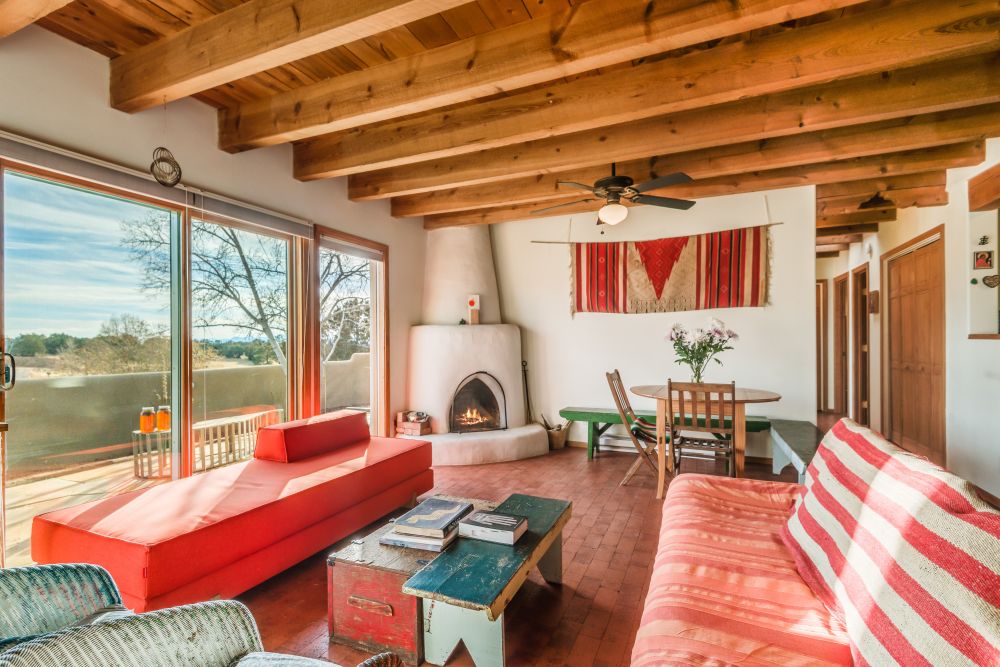
In many Southwest markets, neighborhoods can begin to look indistinguishable from one another. Santa Fe is the exception. Our commitment to Pueblo Revival and Territorial styles ensures that the aesthetic value of the city remains intact. For buyers, this is not just about looks: it is about protecting an investment.
Buyers considering Santa Fe real estate often want to know about the practicalities of these traditional styles. I frequently see this during Santa Fe home inspections: the thick walls of an authentic adobe home or the well-maintained stucco of a newer build provide excellent thermal mass. This keeps homes cool in the summer and warm during our high-desert winters. This architectural continuity prevents the “neighborhood decay” often seen in cities with more trend-based construction.
The High-Desert Lifestyle Advantage
The lifestyle in Santa Fe is defined by a connection to the outdoors that is accessible year-round. At an elevation of 7,000 feet, we avoid the extreme triple-digit heat of the lower Sonoran desert. This allows for a more active outdoor life during the summer months when other Southwest cities are forced indoors.
Outdoor Access and Wellness
Whether it is the 15 miles of the Santa Fe Rail Trail or the specialized mountain biking at Dale Ball Trails, the city is designed for movement. I frequently work with buyers who are leaving major metropolitan areas specifically for this trail access. Many properties in neighborhoods like Sierra del Norte or Wilderness Gate offer direct access to the Santa Fe National Forest, effectively making the mountains an extension of the homeowner’s backyard.
The Arts and Cultural Economy
Santa Fe is the third-largest art market in the United States. This cultural density creates a sophisticated environment that attracts a specific type of global buyer. From the galleries of Canyon Road to the world-renowned Santa Fe Opera, the city offers a level of cultural enrichment usually reserved for cities ten times its size. This robust cultural economy provides a layer of economic diversification that supports the local real estate market.
Key Neighborhoods Driving Demand
Several distinct areas continue to lead the market in terms of desirability and investment potential.
The Historic Eastside This remains the gold standard for Santa Fe real estate. The proximity to the Plaza and the charm of centuries-old adobe structures create a market that is largely insulated from broader economic shifts. It is a favorite for second-home buyers who want a walkable, historic lifestyle.
Las Campanas For those seeking modern luxury and a master-planned environment, Las Campanas is the premier choice. It offers two Jack Nicklaus Signature golf courses and a world-class equestrian center. Buyers here often appreciate the underground utilities, paved roads, and 24-hour security that complement the vast high-desert views.
South Capitol This neighborhood is particularly popular with relocation buyers who want a more traditional “neighborhood” feel while staying close to the historic center. The streets are lined with trees and a mix of architectural styles, including charming brick bungalows and classic Santa Fe adobes.
Navigating the High-Altitude Market
Buying in Santa Fe involves considerations that are unique to our geography. Beyond the architectural styles, buyers must understand the implications of our climate. We experience four distinct seasons, including a true winter and a summer monsoon season.
I frequently advise my clients on the importance of moisture management in our climate. While we are in a high desert, the freeze-thaw cycles and intense UV exposure can be hard on a home. Proper maintenance of flat roofs and professional stucco care are essential for preserving the value of these assets. Understanding these nuances is part of what makes a Santa Fe real estate broker an essential partner in the transition to this region.
Final Thoughts
The enduring appeal of Santa Fe lies in its refusal to be like everywhere else. In an era of increasing homogenization, “The City Different” offers a tangible sense of place and a real estate market built on the solid foundations of scarcity, culture, and climate. For those seeking a long-term home or a strategic second-home investment in the Southwest, Santa Fe remains a premier destination that continues to reward those who appreciate its unique character.
Frequently Asked Questions
Why is Santa Fe real estate more expensive than other parts of New Mexico? The higher price point is a result of high demand for the Santa Fe lifestyle and a very limited supply of available land and housing. The city’s strict building codes and geographic boundaries prevent the rapid, low-cost sprawl seen in other regional cities.
Is Santa Fe a good market for second-home buyers? Yes, Santa Fe has one of the strongest second-home markets in the country. The city’s status as a year-round destination for skiing, hiking, and arts ensures that properties remain desirable throughout the year.
What is the “City Different” architectural style? The style primarily refers to Pueblo Revival and Territorial Revival architecture. These styles prioritize earth-toned stucco, flat roofs with wood beams called vigas, and natural materials like adobe, all designed to blend into the high-desert landscape.
How does the high altitude affect the home buying process? Buyers should consider factors like UV protection for windows and the performance of heating systems in a 7,000-foot environment. It is also important to evaluate the home’s orientation to maximize passive solar heat during the winter months.
About Adrienne DeGuere, Sotheby’s International Realty – Santa Fe
I’m a licensed Realtor® specializing in Santa Fe’s luxury and relocation markets, with more than 130 successful transactions and a top-4% ranking among local agents. Whether you’re considering buying a home in one of Santa Fe’s iconic neighborhoods or selling a property for maximum return, I bring deep local expertise, strategic negotiation skills, and a proven track record of delivering results.
Thinking about your next move in Santa Fe? Contact me to talk through your goals and get a personalized strategy tailored to today’s market.