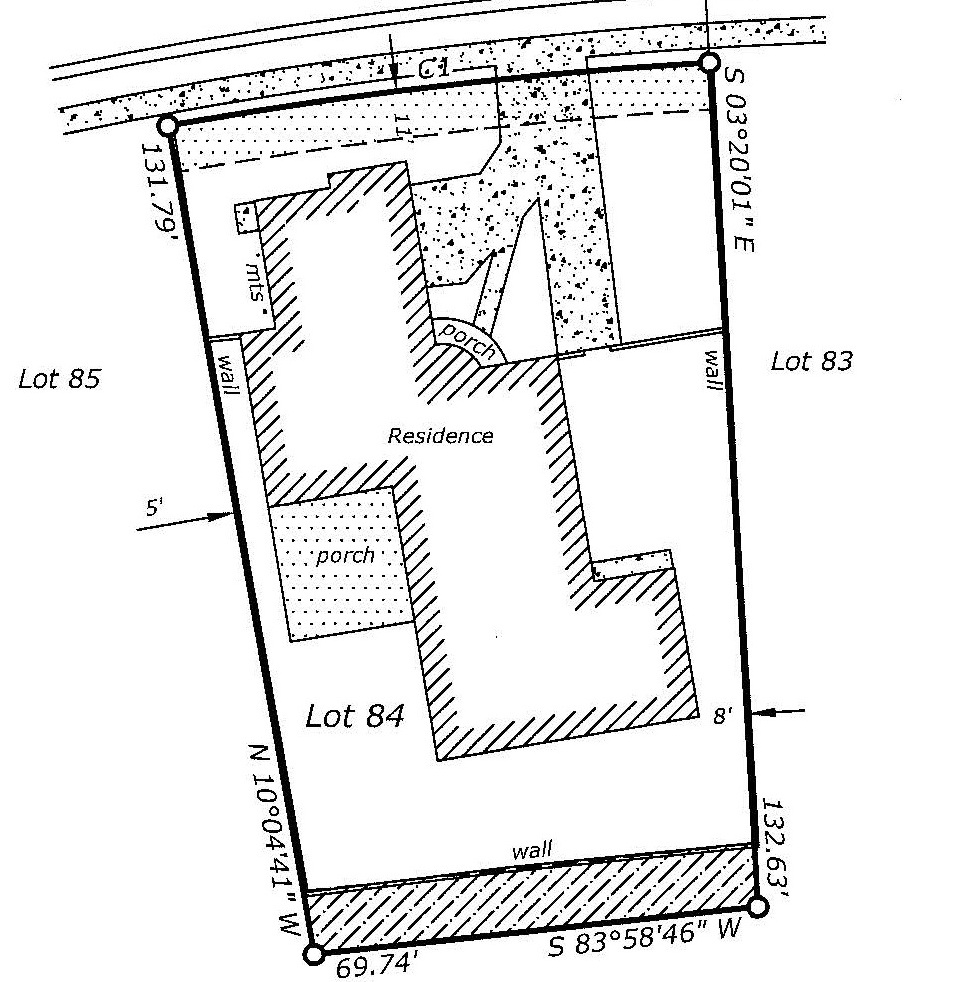
Surveys and Improvement Location Reports often come up during Santa Fe real estate transactions, and they can feel confusing, especially for out-of-state buyers. Understanding the difference between the two, and when each is used, is an important part of due diligence and can help prevent surprises during escrow.
While these documents are often discussed together, they serve very different purposes.
Why Surveys and ILRs Matter
Both surveys and Improvement Location Reports are used to help title companies and lenders evaluate a property before issuing title insurance or final loan approval.
They are designed to answer questions such as:
- Where are the property boundaries
- Where are the improvements located
- Are there easements, encroachments, or boundary concerns
- Does the legal description match what exists on the ground
The type of document required depends on the property, the transaction, and lender or title company requirements.
What Is a Survey
A survey is a detailed, formal document prepared by a licensed professional surveyor. It establishes the precise boundaries of a property and shows how improvements relate to those boundaries.
A survey typically identifies:
- Property boundary lines
- Corners and monuments
- Buildings, fences, walls, and other structures
- Easements and rights of way
- Access points and recorded plats
Surveys are most commonly required when:
- The property is vacant land
- The transaction is commercial
- The parcel is large or irregular
- Boundary lines are unclear
- There is a concern about encroachments
- The lender or title company requires it
Surveys take time to complete and should be ordered early if one is required. Depending on complexity, they may take several weeks.
Common Types of Surveys
In Santa Fe transactions, the most common survey types include:
Boundary Surveys
These determine and document the exact boundaries of a parcel and its relationship to neighboring properties. If discrepancies are found compared to existing plats, additional recording may be required.
ALTA Surveys
These are more comprehensive and are most often used in commercial or high-value transactions. They include boundary information plus additional data requested by lenders or title insurers.
What Is an Improvement Location Report (ILR)
An Improvement Location Report, often called an ILR, is not a survey.
An ILR is a report prepared by a licensed surveyor that shows the location of existing improvements relative to recorded property lines. It relies on existing plats and does not require the same level of boundary investigation as a full survey.
ILRs are most commonly used in:
- Residential resale transactions
- Properties with existing recorded plats
- Situations where boundary disputes are unlikely
An ILR may show structures, driveways, fences, and other visible improvements, but it may not reveal all boundary conflicts or encroachments.
Key Differences Between a Survey and an ILR
The most important distinction is purpose and precision.
A survey:
- Establishes exact boundaries
- Requires locating monuments
- Is designed to identify boundary issues
- May result in a newly recorded plat
An ILR:
- Relies on existing recorded information
- Focuses on improvement placement
- Is intended for title and lender review
- Does not establish new boundary lines
Because of this, an ILR may not be sufficient if there is any concern about boundary disputes, encroachments, or future development plans.
How Title Insurance Fits In
Title companies review surveys and ILRs to determine whether they can insure against certain risks.
Depending on what is provided:
- A survey may allow removal of survey related exceptions from a title policy
- An ILR may be sufficient for standard residential coverage
- Additional exceptions may remain if risks cannot be evaluated
Buyers should understand that acceptance of an ILR or survey by a title company does not guarantee that no issues exist. It simply means the document meets that company’s underwriting requirements.
What Is an Affidavit of No Change
In some resale transactions, a title company may accept an existing ILR or survey if the seller signs an affidavit stating that no changes have occurred since the document was created.
Examples of changes that would matter include:
- New structures or additions
- Pools or walls
- New easements
- Boundary changes
Acceptance of an existing document does not mean it is accurate or complete. Buyers remain responsible for ensuring the property meets their needs and expectations.
What Buyers Should Know
Buyers should:
- Ask early whether a survey or ILR will be required
- Understand what the document does and does not show
- Review the document carefully during due diligence
- Consult professionals if concerns arise
- Avoid assuming that an ILR provides the same protection as a survey
If there is any uncertainty about boundaries, access, or future plans, a full survey may be the better option.
What Sellers Should Know
Sellers should:
- Expect buyers and lenders to request a survey or ILR
- Be prepared to sign an affidavit of no change if applicable
- Understand that providing clarity early helps prevent delays
- Disclose known boundary or improvement issues
Preparation reduces friction and builds buyer confidence.
Final Thoughts
Surveys and Improvement Location Reports play an important role in Santa Fe real estate transactions, but they are not interchangeable.
Understanding the difference allows buyers to protect their investment and sellers to navigate escrow more smoothly. When questions arise, early planning and clear communication are the best tools for keeping a transaction on track.
✨ About Adrienne DeGuere, Sotheby’s International Realty, Santa Fe
I am a licensed Realtor specializing in Santa Fe’s luxury and relocation markets, with 130 successful transactions and extensive experience guiding buyers and sellers through due diligence items such as surveys, ILRs, title review, and property boundaries.
If you are buying or selling and want clarity on whether a survey or ILR is appropriate for your transaction, contact me. I am happy to help you navigate the process with confidence and precision.